



Ready to transform how consumers see and connect with your business? Let’s get into the books that will help you craft a brand that doesn’t just look good but actually drives business growth through successful branding approaches.
What to Look for in a Great Branding Book
Not all branding books are created equal. Some offer genuinely transformative frameworks, while others just rehash common knowledge with fancy jargon. When adding to your branding library, look for books that balance theory with practical application—those rare gems that explain complex concepts and then show you exactly how to implement them in your branding journey.
The best branding resources aren’t just filled with beautiful case studies (though those help); they provide actionable strategies that work for businesses without massive budgets. They should also stand the test of time—focusing on human psychology and communication principles that won’t change with the next social media platform or design trend. Great branding minds understand that while tactics evolve, the core aspects of branding that connect with consumers remain remarkably consistent over time.
The Fundamental Branding Books for Beginners
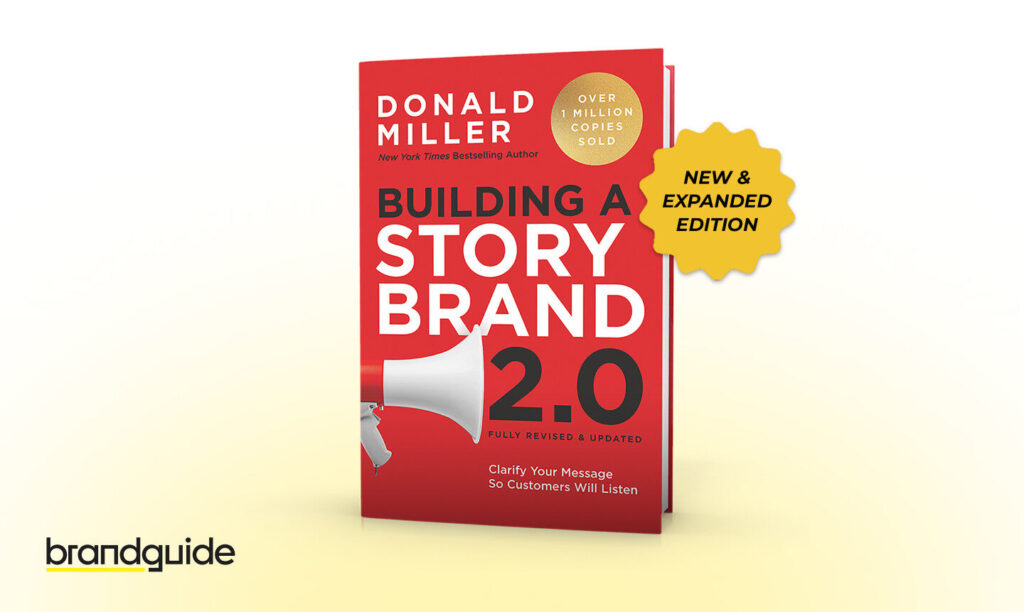
1. “Building a StoryBrand” by Donald Miller
Ever felt like you’re talking about your business but nobody seems to get it? That’s exactly what Donald Miller addresses in this game-changer of a book. Miller cuts through the noise with a simple framework: position your customer as the hero of the story and your brand as their guide.
What makes this book special is how it rewires your thinking about communication. Instead of droning on about your company history or technical specifications, Miller shows you how to craft messaging that actually resonates with human brains, which are naturally wired for stories. His storytelling framework provides valuable insights for any business owner struggling with customer communication.
The StoryBrand framework breaks down into seven elements:
- A character (your customer)
- Has a problem
- Meets a guide (that’s you!)
- Who gives them a plan
- And calls them to action
- That helps them avoid failure
- And ends in success
I’ve used this framework with dozens of clients across various industries, and it’s remarkable how quickly it clarifies their messaging. One tech startup I worked with was struggling to explain their complex software solution. After applying Miller’s framework, they simplified their message from “an integrated platform leveraging AI algorithms for predictive analytics” to “we help small businesses predict inventory needs so they never lose a sale due to stockouts.” Their conversion rate jumped almost overnight—a real-life example of successful branding through better storytelling.
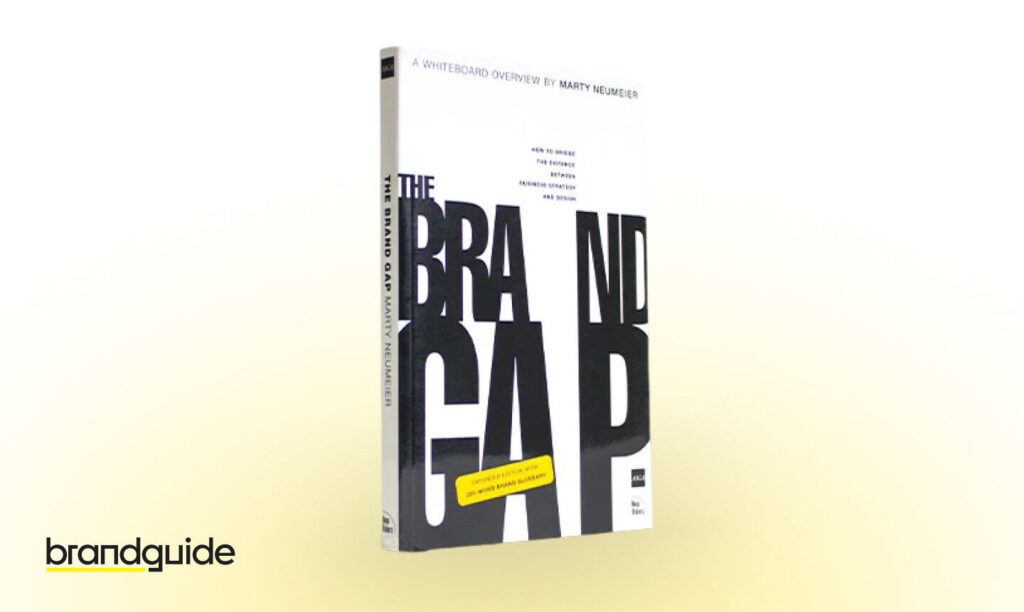
2. “The Brand Gap” by Marty Neumeier
Short, visual, and packed with insights—”The Brand Gap” is like the espresso shot of branding books. Neumeier brilliantly bridges the gap between business strategy and creative design, showing how the two must work together to create a cohesive brand.
What I love about this book is how Neumeier makes complex concepts accessible through simple visuals and frameworks. He defines a brand as “a person’s gut feeling about a product, service, or company,” emphasizing that brands exist in customers’ minds, not in your marketing department.
Neumeier’s five disciplines of branding provide a practical roadmap:
- Differentiate: Stand apart from competitors
- Collaborate: Bring together diverse talents
- Innovate: Create new solutions
- Validate: Test your ideas
- Cultivate: Keep your brand consistent yet evolving
I often recommend this book as the starting point for business owners who are new to branding concepts. It’s a quick read—you can finish it in an afternoon—but you’ll be thinking about its ideas for months afterward.
Strategic Brand Development and Identity Design
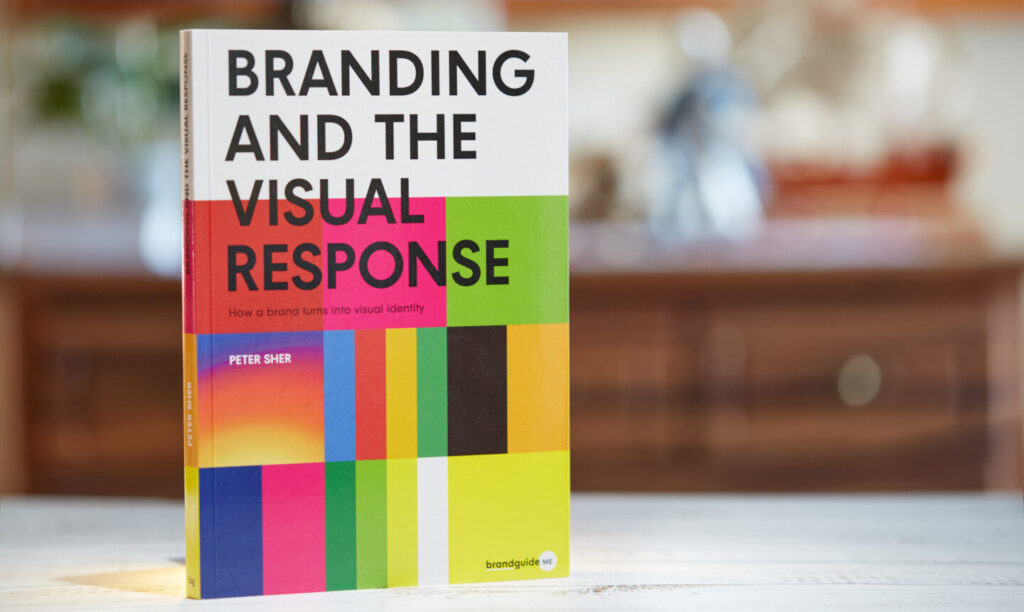
3. “Branding And The Visual Response” by Peter Sher Serfőző
I might be biased here, but my branding book tackles a critical gap I’ve observed throughout my design career: many designers struggle to transition from being mere “executors” of client requests to becoming strategic brand consultants who add genuine business value.
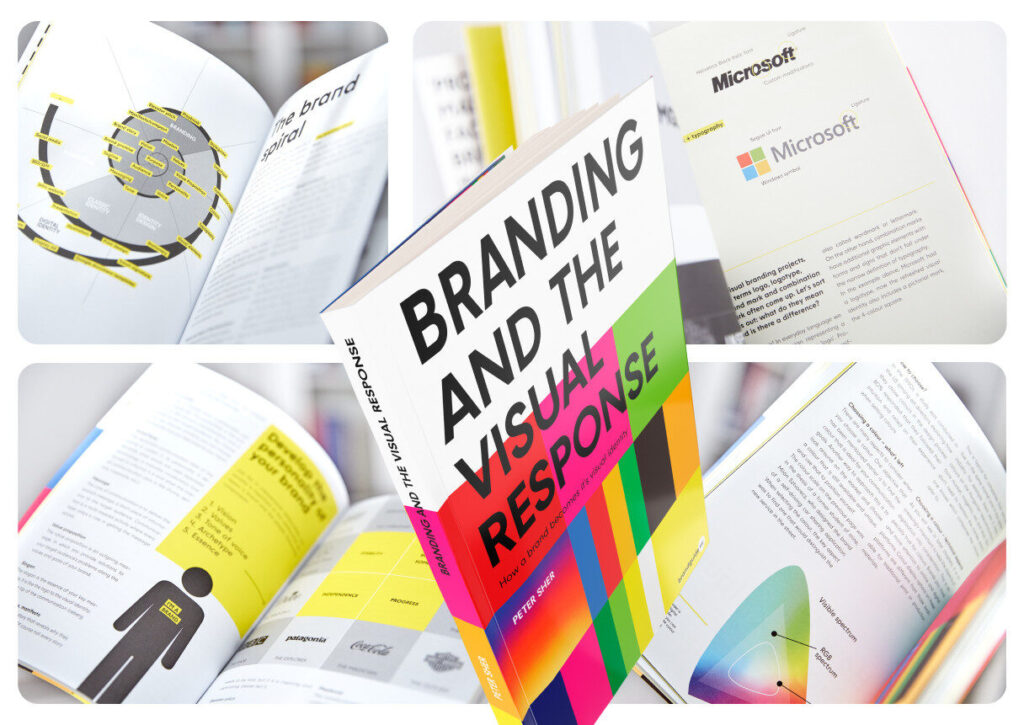
The core concept I introduce is the “brand spiral”—an organic visualization of the branding process that places brand purpose at its center. Unlike linear models, the spiral acknowledges that branding is an evolving, interconnected process, much like spiral patterns found in nature. This approach to branding helps companies develop a clearer vision for their future.
What makes this approach different is how it helps designers break free from the mindset of mindlessly executing client requests to becoming equal partners who can command premium rates by providing strategic thinking alongside visual execution. Through practical frameworks adapted from Google Ventures’ brand sprint methodology, the book provides a structured step approach to developing brand strategies that create real business impact.
One reader, a junior designer in Berlin, told me how the book transformed his client relationships: “Before reading your book, I was basically a Photoshop monkey, making whatever changes clients asked for. Now I ask strategic questions first, which has not only improved the work but allowed me to charge three times my previous rates.” This is exactly the kind of insight I hoped to share when I began my career in branding and started this branding journey myself.
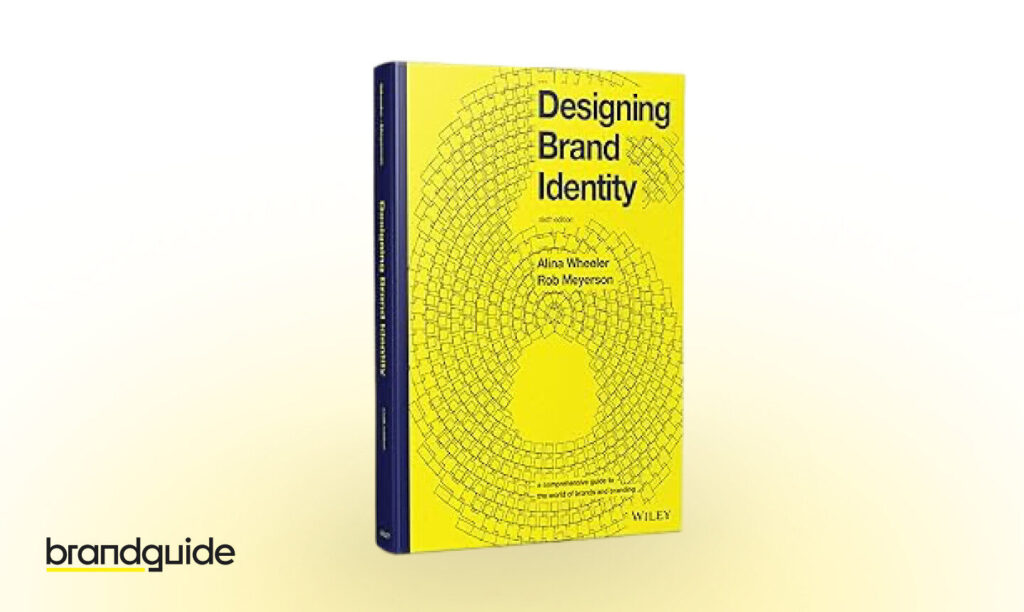
4. “Designing Brand Identity” by Alina Wheeler
If “The Brand Gap” is an espresso shot, “Designing Brand Identity” is a five-course meal. This comprehensive guide covers everything from the initial research phase through strategy development, design execution, and implementation.
What sets Wheeler’s book apart is its sheer thoroughness and visual examples. With over 700 illustrations and case studies from a diverse range of companies, it shows rather than just tells, making complex concepts tangible through real-world applications.
The book is structured around a proven five-phase process:
- Research and analysis
- Strategy clarification
- Design identity
- Create touchpoints
- Manage assets
I often refer to specific sections when working with clients on particular aspects of their brand identity. The chapter on creating coherent touchpoints has been especially valuable for clients struggling to maintain consistency across different channels.
Psychology and Human Behavior in Branding

5. “Contagious: Why Things Catch On” by Jonah Berger
Ever wondered why some ideas spread like wildfire while others—even better ones—fade away unnoticed? Jonah Berger’s “Contagious” is a fascinating exploration of what makes content shareable, backed by solid research rather than just anecdotal evidence. It’s a deep study into consumer behavior that provides valuable insights for modern branding efforts.
Berger introduces the STEPPS framework, identifying six principles that drive people to share:
- Social Currency: We share things that make us look good
- Triggers: Easily remembered environmental cues
- Emotion: High-arousal emotions drive sharing
- Public: Visibility leads to imitation
- Practical Value: Useful content gets passed along
- Stories: Information travels hidden within narratives
I’ve applied these principles with remarkable results for clients’ content strategies. One retail client was struggling with social media engagement until we restructured their content around high-arousal emotions and practical value. Their sharing rate tripled within two months—a great example of successful branding through understanding consumer psychology.
What I appreciate most about Berger’s approach is that it goes beyond the typical “viral marketing” hype to explain the psychology behind why humans share certain things and not others. His insights help businesses create content that naturally resonates with customers in our time of information overload.

6. “The Hero and the Outlaw” by Margaret Mark and Carol S. Pearson
This book tackles branding from a completely different angle: archetypal psychology. Drawing on Carl Jung’s work, Mark and Pearson demonstrate how universal character patterns—like the Hero, the Caregiver, or the Rebel—can be leveraged to create powerful brand identities.
The genius of this approach is that it taps into deep psychological patterns that humans have recognized for thousands of years. When your brand embodies a clear archetype, it becomes instantly more relatable and meaningful to customers.
For example, Nike embodies the Hero archetype, while Harley-Davidson channels the Outlaw. These aren’t arbitrary choices—they reflect the core values and emotional appeals of these brands.
I’ve found archetypal analysis particularly helpful for clients who have a solid product but struggle to define their brand’s personality. One software company I worked with was sending mixed messages until we identified their true archetype as the Sage—focused on knowledge and expertise. This clarity transformed their communication strategy and helped employees better understand what the company truly stands for.
Brand Strategy and Positioning
7. “Positioning: The Battle for Your Mind” by Al Ries and Jack Trout
Though first published in 1981, “Positioning” remains startlingly relevant in today’s oversaturated market. Ries and Trout argue that with thousands of marketing messages bombarding consumers daily, the only way to cut through the noise is to secure a distinctive position in the consumer’s mind.
The book’s central insight is brilliantly simple: it’s not about creating something new and different, but about manipulating what’s already in the mind, making connections that already exist. It’s about finding a “hole” in the consumer’s mind and filling it before someone else does. This approach to branding has influenced countless successful companies across every industry.
Classic examples include how Avis embraced its second-place status with “We try harder” or how 7-Up positioned itself as the “Uncola” during Coca-Cola’s dominance. These weren’t just clever slogans but strategic positions that gave these brands a clear place in consumers’ mental landscapes. The book provides numerous real-world examples that demonstrate how positioning creates memorable impressions in customers’ minds.
I’ve seen positioning work wonders for small businesses competing against industry giants. One local coffee shop client was struggling until we positioned them not as a competitor to Starbucks but as “the anti-chain”—emphasizing their local roots and community involvement. This clear positioning helped them not only survive but thrive despite three chain competitors opening nearby. It’s a perfect example of how strategic thinking about brand positioning can drive business growth even with limited resources.
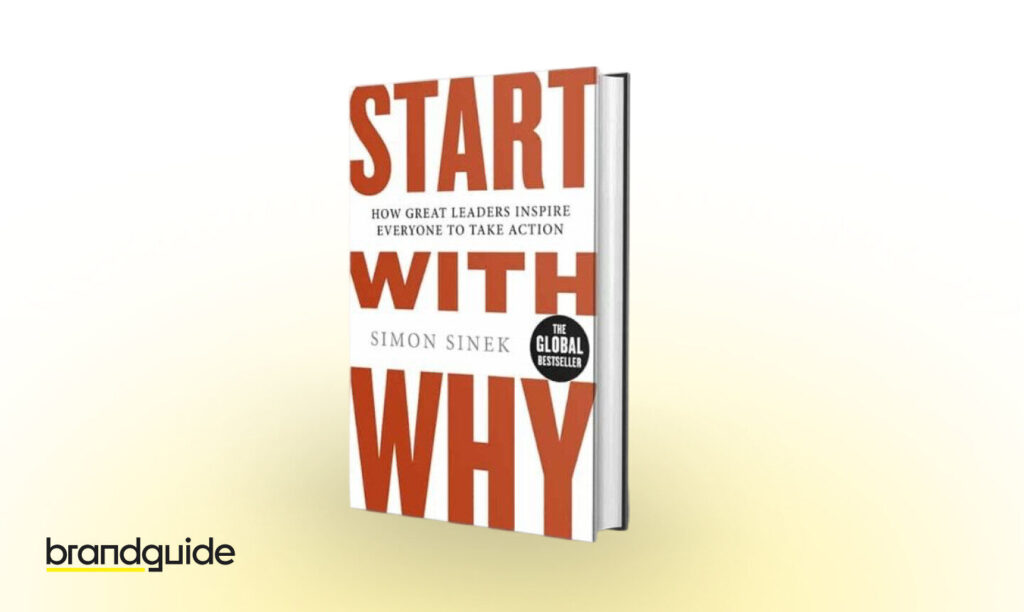
8. “Start with Why” by Simon Sinek
Simon Sinek’s “Start with Why” revolutionized how many of us think about brand purpose. Through his famous “Golden Circle” concept, Sinek argues that people don’t buy what you do; they buy why you do it.
Most companies communicate from the outside in—describing what they do and how they do it. Inspiring brands, however, communicate from the inside out, starting with their purpose (the why), then explaining how they fulfill that purpose, and finally what they offer.
Apple doesn’t just sell computers; they challenge the status quo and think differently (why). They do this by creating beautifully designed, user-friendly products (how), which happen to be computers, phones, and other devices (what).
This framework has been a revelation for many of my clients who were stuck describing features instead of connecting emotionally with customers. One healthcare startup transformed their messaging from technical descriptions of their platform to their core purpose: giving patients control over their health data. The difference in audience engagement was night and day.
Brand Culture and Experience
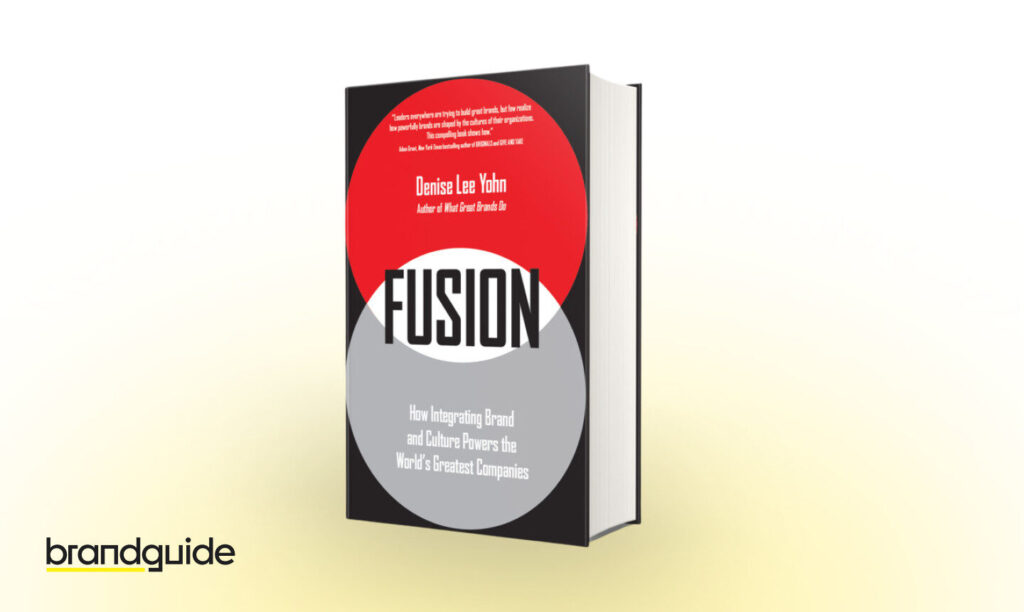
9. “Fusion: How Integrating Brand and Culture Powers the World’s Greatest Companies” by Denise Lee Yohn
One of the most overlooked aspects of branding is how internal culture and external brand must align to create authentic experiences. Denise Lee Yohn’s “Fusion” tackles this head-on, showing how the most powerful brands are built from the inside out.
Yohn makes a compelling case that your brand can’t just be a marketing façade—it must be deeply embedded in your organizational culture. Employees need to live the brand values for customers to truly experience them.
The book outlines a clear process for creating this alignment:
- Define your brand identity
- Cultivate a distinctive culture
- Organize and operate deliberately
- Create greater brand experiences
- Connect your brand community
I’ve witnessed the importance of this alignment firsthand. One client with a beautiful brand identity and messaging was still receiving poor customer reviews. The problem? Their internal culture didn’t support the promises they were making externally. After implementing Yohn’s principles to align their values, hiring practices, and operational systems with their brand promise, customer satisfaction scores rose dramatically.

10. “Delivering Happiness” by Tony Hsieh
Few books capture the power of culture-driven branding better than “Delivering Happiness,” the story of how Tony Hsieh built Zappos into a customer service legend. What makes this book special is its authenticity—it’s not a theoretical framework but a real-life example in building a brand around core values and exceptional customer interactions.
Hsieh shares how Zappos made customer service the center of their brand identity, even offering new employees $2,000 to quit after training if they weren’t fully committed to the company’s culture. This extreme focus on cultural alignment created a brand experience so distinctive that Amazon eventually acquired the company for $1.2 billion.
The book’s most valuable insight is how Zappos connected happiness—of employees, customers, and partners—to sustainable business success. By prioritizing long-term relationships over short-term profits, they created both a distinctive brand and a thriving business. Hsieh’s approach to branding through exceptional customer service transformed an entire industry’s thinking about the role of corporate culture.
I often recommend this book to clients who view branding as primarily an external exercise. It vividly demonstrates how your internal culture becomes your external brand, whether you plan for it or not. The storytelling style makes complex concepts about brand-building accessible and engaging, which is why it remains one of the most influential books about the customer-centric aspects of branding.
Digital-Era Branding and Future Trends
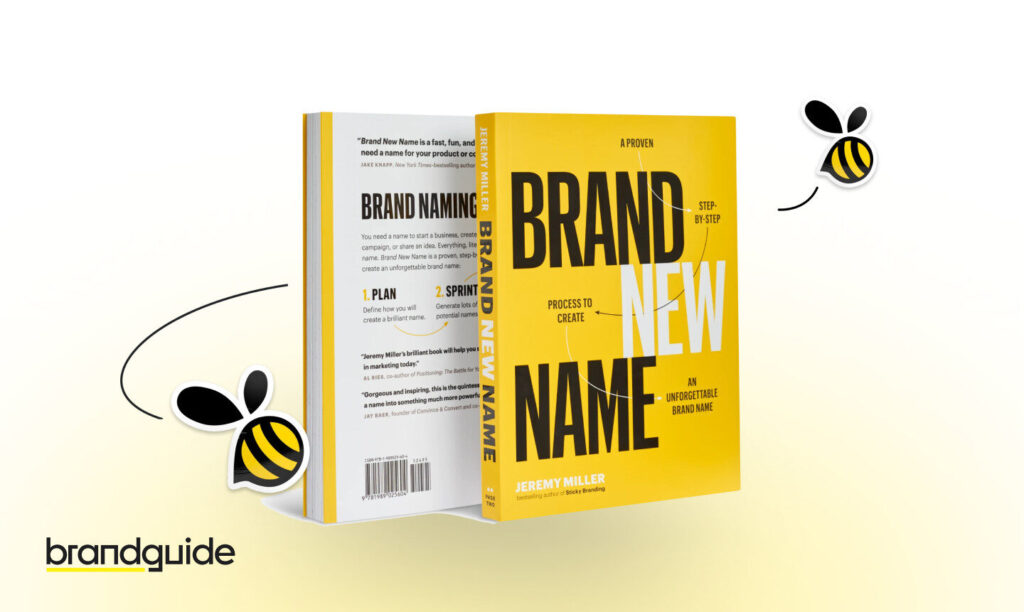
11. “Brand New Name” by Jeremy Miller
Creating a memorable, available brand name has never been more challenging. With millions of registered trademarks and dwindling domain availability, the naming process can feel overwhelming. Jeremy Miller’s “Brand New Name” offers a refreshingly practical approach to this critical aspect of branding.
What sets this book apart is its step-by-step process for generating and evaluating names. Miller walks readers through collaborative naming exercises, evaluation frameworks, and testing methodologies to identify names that are not only creative but strategically sound. His insights into how consumers connect with brand names are particularly valuable for businesses launching new products or undergoing rebranding.
The book introduces the SMILE test for evaluating potential names:
- Suggestive of key benefits
- Memorable and distinctive
- Imagery that’s visually evocative
- Legs for extended marketing campaigns
- Emotional connection with audiences
I’ve applied Miller’s collaborative naming process with client teams, and it’s remarkably effective at generating options that traditional brainstorming misses. One tech startup I worked with had been stuck on naming for months until we used Miller’s “word blending” technique, which led to a distinctive name that perfectly captured their innovative approach. This book exemplifies how specific aspects of branding, when done right, can significantly impact a company’s market position and consumer perception.
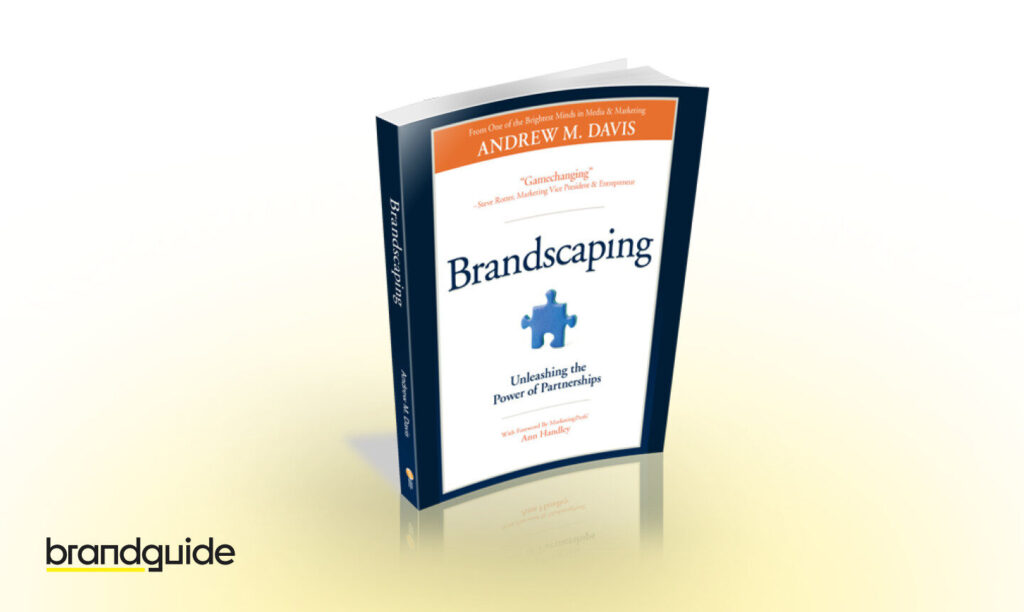
12. “Brandscaping” by Andrew M. Davis
In today’s content-saturated world, standing out requires more than just creating your own content—it requires strategic partnerships. Andrew Davis’s “Brandscaping” introduces a revolutionary approach to content marketing through collaboration with other brands.
Davis defines brandscaping as “the process of partnering with other brands to create content that reaches an audience neither brand could reach alone.” This approach leverages the audiences and expertise of complementary brands to create win-win content partnerships.
The book presents numerous case studies of successful brandscaping, from how Weber grills partnered with meat producers to create recipe content to how GE partnered with popular science YouTube channels to reach new audiences.
I’ve helped several clients implement brandscaping strategies with impressive results. One B2B software company partnered with complementary service providers to create an industry report that none could have produced alone. The content not only reached a much larger audience but positioned all partners as industry leaders.
How to Implement These Branding Insights in Your Business
Reading about branding principles is one thing; implementing them is another. Here’s a practical approach to applying the wisdom from these books:
- Start with clarity about your purpose and position. Before diving into visual design or messaging tactics, get crystal clear on your “why” (Sinek) and your position in the market (Ries and Trout).
- Create a narrative framework for your brand. Use Miller’s StoryBrand framework to clarify how your products or services help customers overcome challenges.
- Identify your brand archetype. Use Mark and Pearson’s archetypal framework to define your brand’s personality and emotional appeal.
- Align your internal culture with your external brand. Apply Yohn’s principles to ensure your team lives the brand values you promote.
- Design your visual identity to support your strategy. Once your strategic foundation is solid, use Wheeler’s process to develop visual elements that reinforce your brand positioning.
- Create content and experiences that reflect your brand. Use Berger’s STEPPS framework to develop shareable content and Davis’s brandscaping approach to extend your reach.
The most effective approach is to start with strategy before tactics. Many businesses make the mistake of jumping straight to logo design or social media before establishing their strategic foundation. That’s like decorating a house before building the structure—it might look good momentarily, but it won’t stand the test of time.
Conclusion: Building Your Brand Library
These twelve books represent different facets of the branding process, from foundational strategy to tactical implementation. While you might not need to read all of them immediately, having them in your brand library provides a valuable resource as your business evolves.
If you’re just starting your branding journey, I recommend this reading order:
- “Start with Why” for clarity on your purpose
- “The Brand Gap” for a quick overview of branding principles
- “Branding And The Visual Response” for the strategic framework
- “Building a StoryBrand” for messaging clarity
From there, choose books that address your specific challenges, whether that’s creating a distinctive culture, developing shareable content, or building strategic partnerships.
As a bonus branding book recommendation, I’d suggest looking into Yvon Chouinard’s “Let My People Go Surfing.” While not strictly a branding book, it offers remarkable insights into how Patagonia built a brand so authentic and purpose-driven that consumers are fiercely loyal to it. Chouinard’s vision for integrating business, environmental responsibility, and authentic company culture provides valuable lessons for any brand looking to create deeper connections with today’s conscious consumers.
Remember that great branding isn’t created overnight—it’s an ongoing process of alignment, consistency, and evolution. These books provide the knowledge foundation, but the real work happens when you apply these principles consistently across every customer touchpoint.
What branding challenges is your business facing right now? Which of these books seems most relevant to your current situation? I’d love to hear your thoughts in the comments below.