



Today’s Reality: The Accelerating Pace of Change
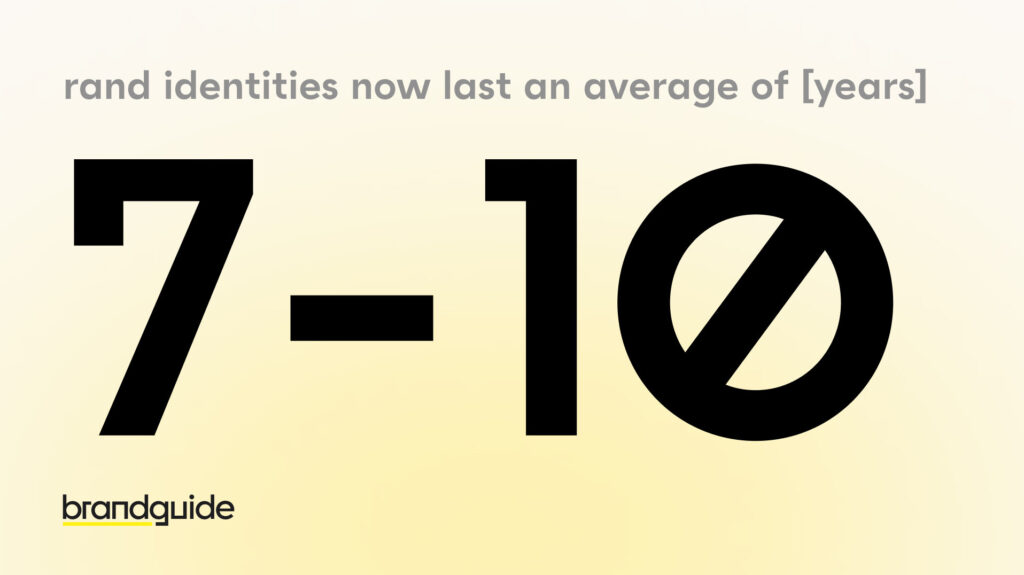
Here’s something that might surprise you: brand identities now last an average of 7-10 years before major overhauls, while minor refreshes happen every 3-5 years. This is a dramatic shift when you consider that before the 1990s, a brand identity could remain unchanged for 20-30 years.
Think about this: Coca-Cola has essentially used the same Spencerian script since 1900 – that’s over 125 years of consistency! Sure, there were minor tweaks (the red color in 1950, the white wave in 1969), but the essence stayed the same. Meanwhile, tech companies today refresh every 3-7 years, sometimes even more frequently.
Why Did Everything Speed Up?
Three major forces are at play:
1. Digital Transformation: Logos designed for print simply don’t work on mobile screens, app icons, or across different social media platforms. The massive “flat design” wave we’ve seen since the 2010s? That was all about this shift – think Instagram’s 2016 transformation or how most banks simplified their logos for digital-first experiences.
2. Shorter Market Cycles: You can’t operate with the same approach for decades anymore. Industries transform, new competitors emerge, and customer expectations shift constantly.
3. Merger & Acquisition Activity: Here’s the kicker – 80% of mergers and acquisitions trigger rebrands. This is the #1 reason companies rebrand, making M&A the most predictable catalyst for change.
Industry Differences: Not All Brands Age the Same
Here’s probably the most important thing you need to know as a designer: industry determines everything.
Fast-Moving Sectors
Technology & Software: Refresh every 3-7 years. Why? Because signaling innovation is their survival mechanism. If your logo looks outdated, customers assume your product is too.
Healthcare & Pharmaceuticals: Every 5-8 years, which might surprise you, but this sector is one of the most prolific rebrandera. The reason? Extensive M&A activity and the practice of using different branding for different drug indications.
Financial Services: Every 8-12 years, heavily influenced by merger waves.
Slower-Moving Sectors
Traditional FMCG Brands: 10-20+ years. These brands build generational emotional connections where consistency represents value itself. Think about heritage brands like Heinz or Campbell’s – radical change would destroy decades of built equity.
Luxury Brands: 10-15 year cycles with conservative approaches. Heritage preservation is a strategic tool here, not a limitation.
Minor Refresh vs. Complete Rebrand: Understanding the Difference
Getting this distinction right determines your costs, timeline, and risk level. Let me break it down for you.
Minor Refreshes (Brand Refresh)
What they involve: Modernizing typography, refining color palettes, optimizing logos – but keeping the brand essence intact.
When to use them:
- Your logo feels dated but the brand still resonates
- You’re expanding into new digital channels
- There’s visual inconsistency across touchpoints
The Numbers:
- Timeline: 1-2 months
- Cost: $7,500-$60,000
- Risk: Low – failed refreshes rarely cause lasting damage
Real Example: Think about Google’s evolution. They’ve maintained brand recognition through subtle refinements rather than radical changes, preserving equity while staying current.
Complete Rebrands (Full Rebrand)
What they involve: Complete strategy, positioning, and identity transformation. Sometimes even name changes.
When to use them:
- Mergers/acquisitions
- Complete market repositioning
- Recovering from major crises
- The business model has fundamentally changed
The Numbers:
- Timeline: 6-18 months
- Cost: $50,000-$500,000+
- Risk: High – 40% of rebrands fail to deliver positive ROI
On average, 215 assets need updating in a full rebrand: logos, packaging, digital materials, signage, marketing collateral – it’s a massive undertaking.
The High Cost of Failure: Why Rebrands Go Wrong
Here’s something you can’t ignore as a designer: successful rebrands achieve 13.6% annual growth versus 7.4% industry averages. But bad decisions destroy value quickly:
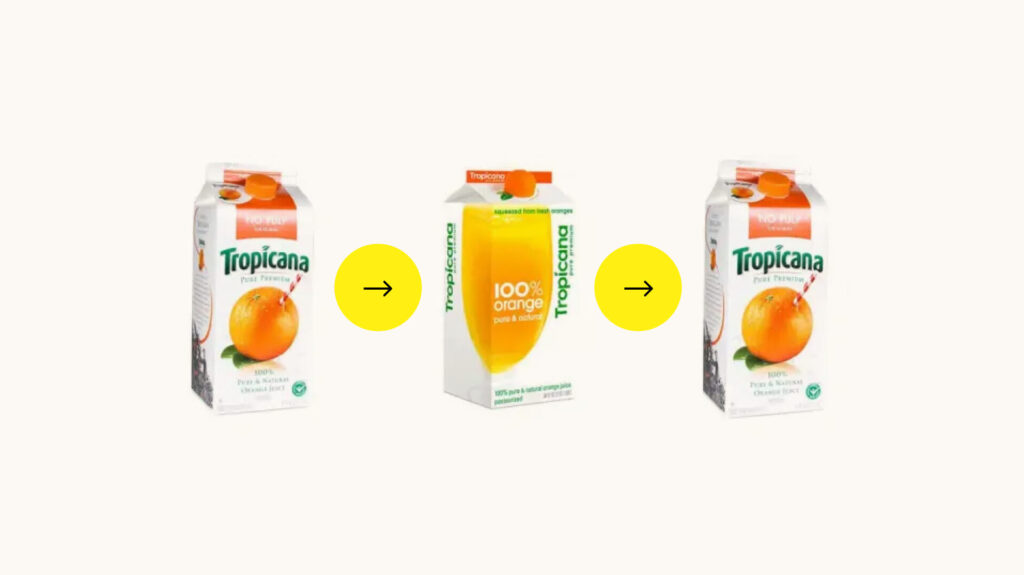
Tropicana (2009): They redesigned their packaging, sales dropped 20% immediately, resulting in $30 million in losses – reversed within 60 days.
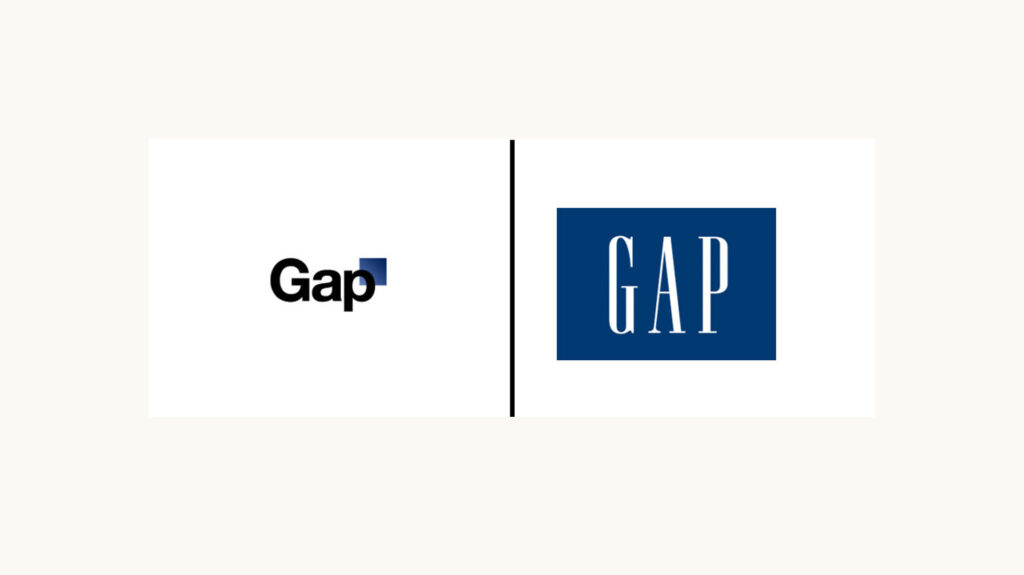
Gap (2010): They unveiled a new logo and reversed it within one week due to customer backlash.
RadioShack (2008): They rebranded to “The Shack” and filed for bankruptcy by 2015.
The lesson? Evolution works, revolution is risky. The examples of Coca-Cola, IBM, Nike, and FedEx show that great design can last decades when executed with strategic purpose.
Startups vs. Corporations: Two Different Worlds
If You’re Designing for Startups
Young companies typically rebrand 1-3 times in their first seven years. The #1 reason? Trademark disputes.
Safest Window: Within the first five years, before significant brand recognition builds.
Cost: $50,000-$500,000, but since there’s less brand equity at stake, you can take bigger creative risks.
Key Insight: Tech startups move fastest (every 2-4 years), fintech startups rebrand after achieving traction (3-5 years), and CPG startups often time rebrands around major retail expansion.
If You’re Designing for Fortune 500 Companies
Major overhauls every 7-10 years, but with 12-24 month execution timelines. On average, 600+ branded assets need updating.
Cost: $1-50+ million, with professional brand management teams and global rollout infrastructure.
The Paradox: Large FMCG companies are most conservative (15-20 year cycles), tech giants most frequent (5-8 years).
When Change Becomes Necessary: Warning Signs
As a designer, you need to spot these signals before your client does. Annual brand health assessments help identify misalignment early:
Red Flags:
- Declining sales or market share
- Brand confusion with competitors
- Fundamental target audience shifts (45% of rebrand reasons)
- Leadership changes with new vision
- Technology making current branding obsolete
- Negative associations (26% of rebrand reasons)
Decision Framework:
- Refresh when brand strategy is sound but visual execution feels dated
- Completely transform when business strategy, mission, values, or market position have fundamentally evolved
Current Trends Shaping 2025
AI Integration: New waves of rebrands are emerging as every industry incorporates artificial intelligence into their positioning.
Sustainability Focus: Particularly in FMCG, fashion, and automotive – think H&M’s 2030 sustainability rebrand. 64% of consumers build brand loyalty based on shared values.
Digital Optimization: Flat, scalable logos are now standard across all industries for app icons, social media, and responsive design needs.
Automotive Example: Between 2019-2023, virtually every major automotive brand rebranded: BMW (2020), Volkswagen (2019), Nissan (2020), Kia (2021) – all driven by the electric vehicle transition.
Practical Advice for Designers
1. Review Your Client’s Brand Annually: Don’t wait for visible problems. Tracking quarterly metrics helps you identify misalignment between brand identity and business reality before crises force reactive changes.
2. Preserve Valuable Brand Equity: Evolution, not revolution, is the goal. Mastercard achieved 80%+ recognition without wordmarks by gradually simplifying – removing text from their overlapping circles in 2019 after decades of equity building.
3. Test Before Full Rollout: Gap and Tropicana’s failures demonstrate the cost of skipping validation.
4. Communicate Proactively: Explain the reasons and rationale for changes to stakeholders.
5. For Startups: Plan for 2-3 rebrands in the first seven years, address trademark issues early, and recognize that revitalization is the better choice 80% of the time over complete overhauls.
6. For Corporations: Budget 18-24 months, allocate 5-10% of annual marketing budget, and consider phased rollouts for complex operations.
Finding the Balance: Your Role as a Designer
Here’s the modern brand identity paradox: identities must evolve faster than ever to stay relevant – yet companies that change too quickly never build the equity that ensures survival.
The most successful brands – Coca-Cola, IBM, Nike, FedEx – prove that strategic evolution over decades builds more value than chasing trends.
The Key: Annual brand health assessments, strategic timing (responding to genuine market misalignment, not aesthetic whims), and preserving valuable equity while modernizing.
As market dynamics accelerate and average brand lifespans compress, the companies that will achieve the 13-14% growth premium are those that balance continuity with change, preserve equity while modernizing, and act strategically rather than reactively.
And you, as a designer, are the key player in this process. Your knowledge, vision, and advice determine when and how a brand successfully transforms. That’s a powerful position to be in – use it wisely, and you’ll create identities that not only look great but stand the test of time.
Sources Referenced
This guide draws from 15 authoritative sources on brand identity, rebranding statistics, and design best practices:
- https://erahaus.com/rebranding/how-often-do-companies-rebrand/
- https://mocktheagency.com/content/how-often-do-companies-rebrand/
- https://mocktheagency.com/content/how-often-should-you-rebrand-logo/
- https://www.bynder.com/en/blog/rebranding-statistics/
- https://www.amraandelma.com/rebranding-campaign-statistics/
- https://vi360.com/files/VI360_BestPracticeReportE5-24_Summary.pdf
- https://www.blankboard.studio/originals/blog/brand-refresh-vs-rebrand-vs-website-redesign-cost-roi
- https://thefutur.com/content/the-evolution-of-famous-logos-over-time
- https://www.freelogoservices.com/blog/logo-rebranding-when-is-the-right-time-for-a-logo-redesign/
- https://jesscreatives.com/blog/when-is-it-time-to-rebrand/
- https://shortkut.com/blogue/the-importance-of-a-logo-why-and-how-to-refresh-it-every-5-years/
- https://wearemotto.com/blog/how-often-should-you-rebrand
- https://webdesignerdepot.com/successful-rebrands-ranked/
- https://thebrandleader.com/how-often-should-my-company-rebrand/
- https://webflow.com/blog/famous-logos